Blackmeans’ SS19 Boro Pants Are Japanese Archive Fashion at Its Most Aggressive
Some clothes are designed to look better when they are perfectly clean. Blackmeans has never really operated that way.
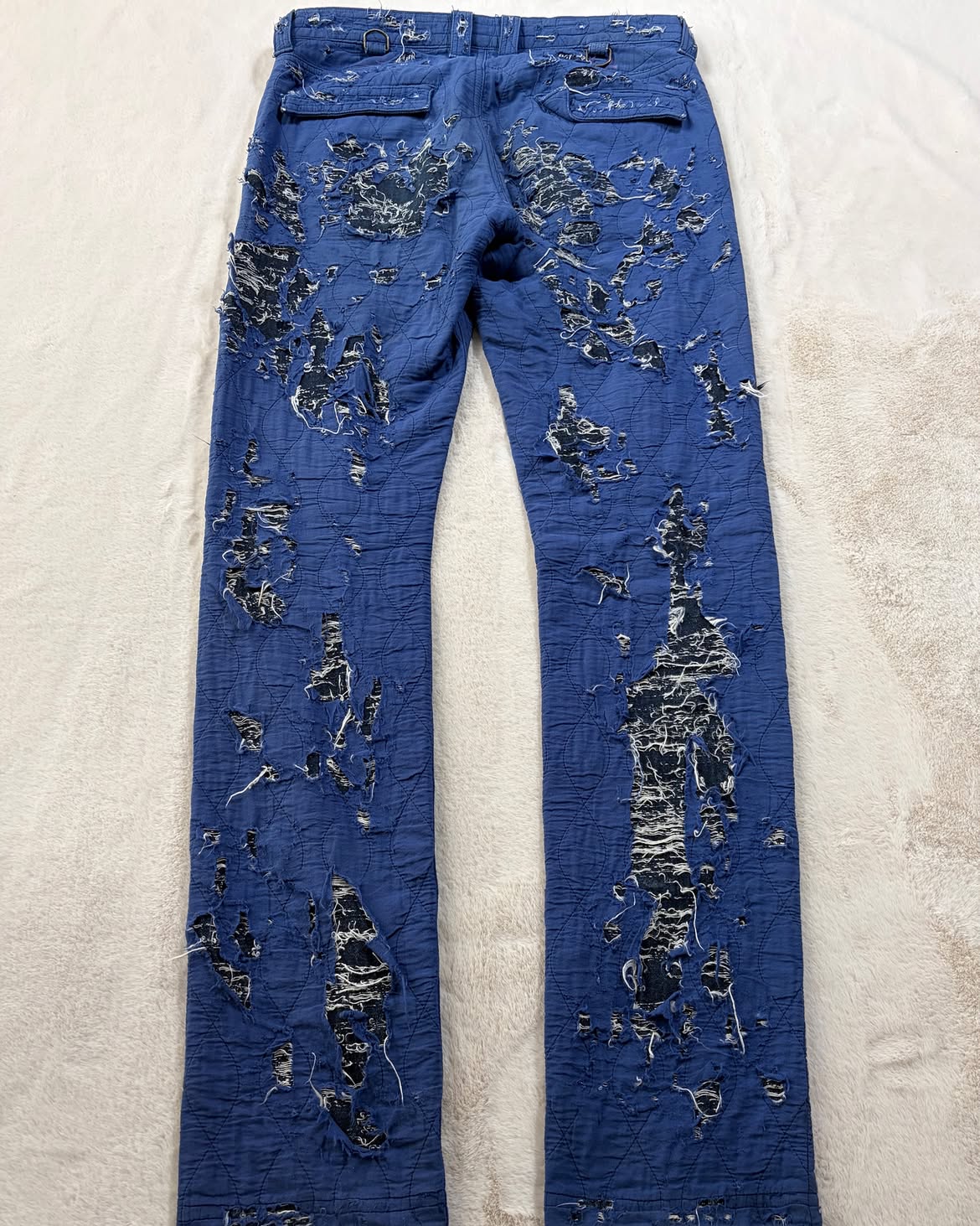
These Blackmeans SS19 Boro pants are a perfect example of the Japanese label’s ability to make destruction feel deliberate. Finished in a deep blue and completely covered in aggressive distressing, exposed layers, loose threads, quilting and contrasting dark fabric underneath, the pants look like something that has survived years of wear despite the piece being constructed with this appearance intentionally.
Founded in 2008, Blackmeans developed its identity through a combination of Japanese hardcore punk, motorcycle culture, tribal influences and high fashion, with handcrafted techniques becoming a major part of the brand’s reputation. That philosophy is easy to see here. Rather than treating damage as something that ruins clothing, Blackmeans turns it into the defining feature of the garment. :contentReference[oaicite:0]{index=0}
Controlled Destruction
The first thing that stands out is the amount of texture.
The blue outer layer is torn open across nearly the entire pair of pants, revealing darker fabric underneath along with white threads running through the exposed sections. Some areas are barely distressed while others are almost completely eaten away, creating an irregular pattern from the waist all the way down toward the hem.
That inconsistency is what makes the pants interesting.
Instead of looking like a factory-distressed pair of jeans where the same three rips are placed around the knees, every section feels different. Large patches around the thighs and lower legs sit next to tiny openings and stray threads, making the garment feel closer to a piece of textile art than standard denim.
Even the untouched sections have movement to them. The fabric features visible stitched lines running throughout the garment, giving the blue material a quilted appearance before the distressing is even considered.
The Details Make The Piece
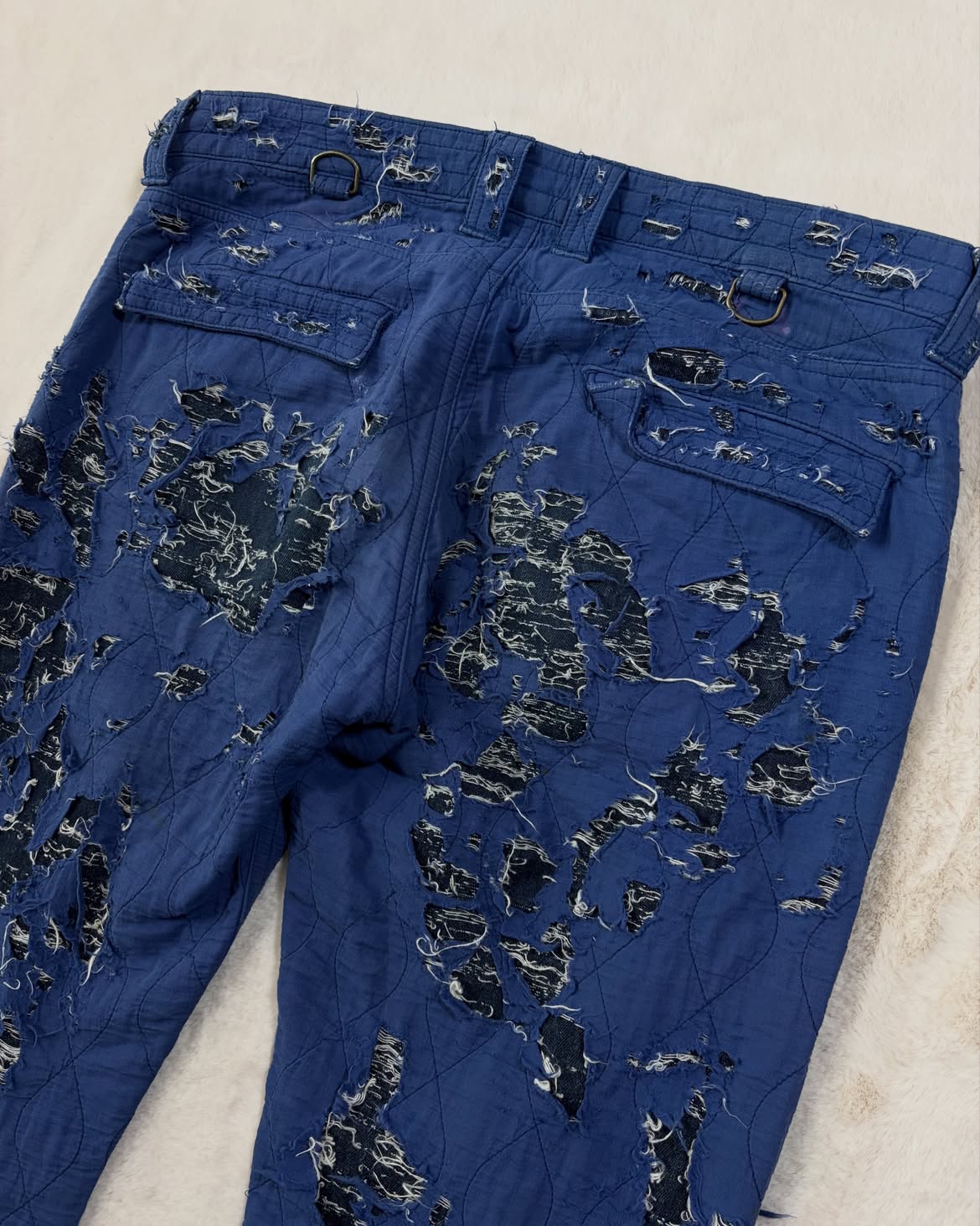
The back might be even better than the front.
Two asymmetrical flap pockets sit around the upper section, while metal D-rings are positioned around the waistband. The hardware gives the pants a subtle utilitarian and motorcycle-inspired feeling without overpowering the fabric itself.
Then there are the unfinished edges.
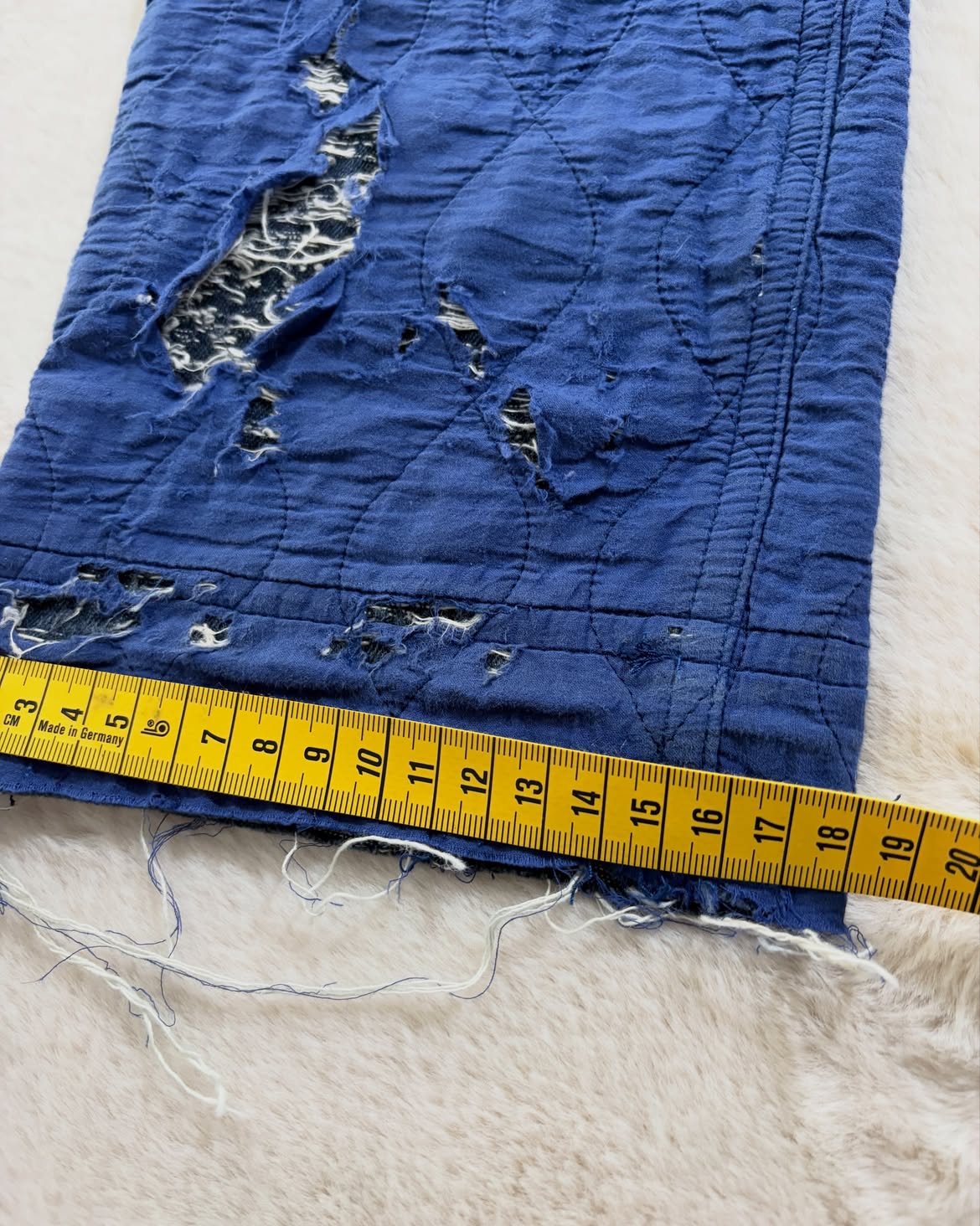
Threads are intentionally left hanging from distressed sections and around the bottom hem, allowing the garment to look slightly different depending on how it falls while being worn. From a distance, the pants look chaotic. Up close, you begin noticing how many individual layers are responsible for creating that chaos.
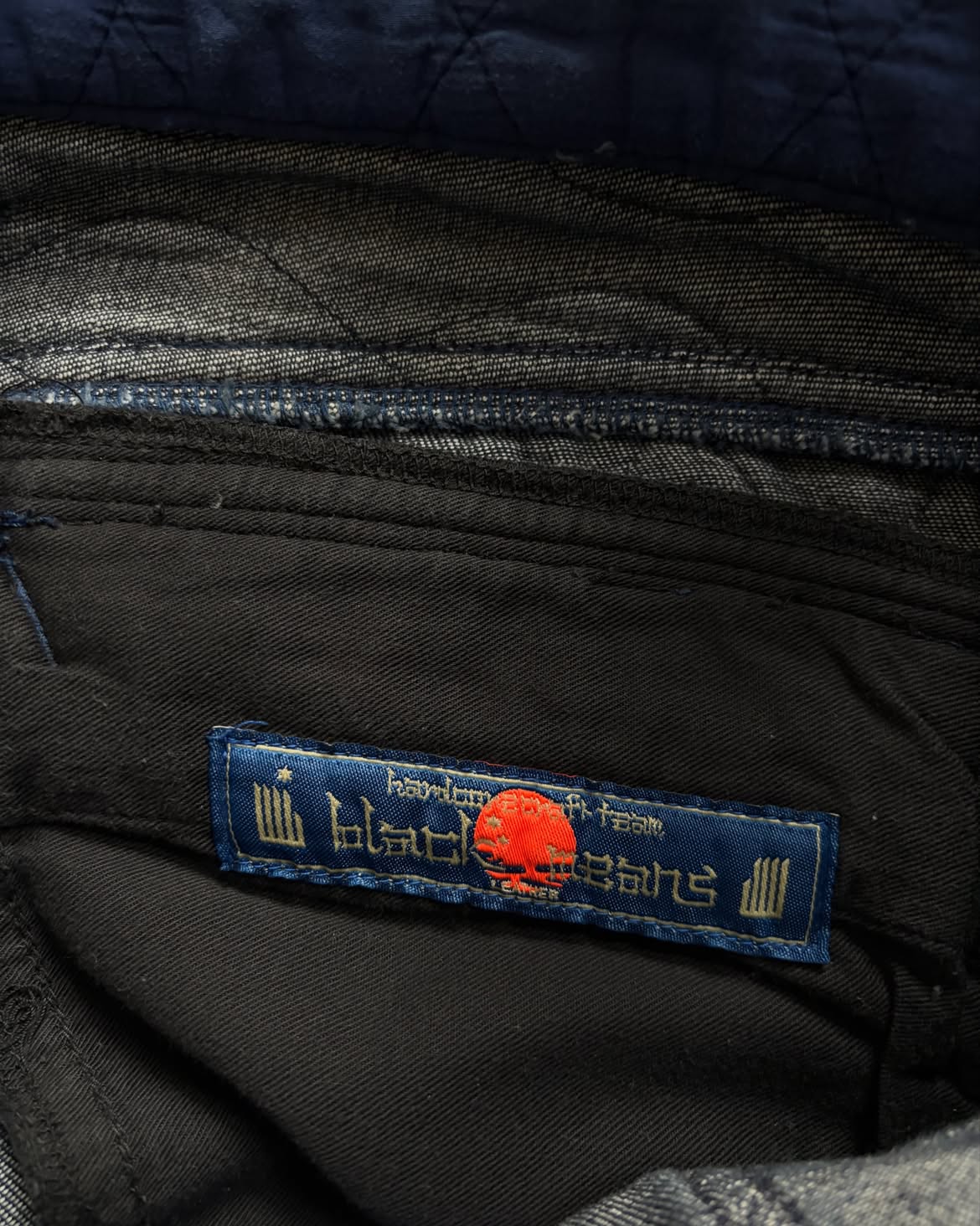
The interior label and construction also reinforce what makes archive Japanese fashion so appealing to collectors. According to the original listing, this pair was made in Japan, 100% handcrafted and produced in a very limited run.
Boro Reimagined Through Blackmeans
The word “Boro” immediately connects the piece to the visual language of repaired and layered Japanese textiles, but Blackmeans approaches that idea through its own punk-heavy perspective.
Instead of trying to make the repairs disappear, everything is exaggerated.
The exposed darker material, loose white fibers, ripped blue surface and visible stitching all become part of the design. What would normally be considered deterioration becomes decoration.
That philosophy continues to appear in Blackmeans' work today. The brand currently sells a “BORO Leather Patch Work” Slim Pants design through its official store, showing that patchwork and visibly reconstructed clothing remain part of its design vocabulary. :contentReference[oaicite:1]{index=1}
Why Pieces Like This Become Archive Grails
Fashion moves fast enough that a six or seven-year-old garment can already feel like it belongs to a completely different era.
Blackmeans' Spring/Summer 2019 collection now sits within an extensive archive stretching back through more than a decade of the brand's collections. :contentReference[oaicite:2]{index=2} Pieces like these pants become increasingly interesting because they represent a specific point in that history while also being difficult to reproduce exactly.
Every rip, exposed thread and worn section becomes part of the identity of the garment.
The pair shown here is a size 4, listed as fitting approximately a 30-32 inch waist with roughly a 33-inch length, and has already been sold. That almost makes the piece more interesting. This is not something sitting on a current-season product page waiting to be added to cart.
It is the type of garment you have to stumble across.
And with archive fashion, sometimes finding the piece is half of the appeal.
Blackmeans took a simple pair of blue pants and made them look like they had already lived an entire life before reaching their owner. In a fashion landscape filled with manufactured distressing, these feel significantly more considered.
Destroyed, reconstructed and unmistakably Blackmeans.