
Cole Jackson Builds a World of Philosophy, Community, and Storytelling on HOBBES
Cole Jackson’s HOBBES is the kind of album that demands more than a quick listen. Across 16 tracks and just over an hour of music, Cole builds something that feels less like a traditional rap project and more like a fully constructed world. The album moves through different styles of hip-hop while staying centered around storytelling, social critique, personal experiences, and the idea of finding real connection in a world that can make people feel isolated.
The title itself comes from 17th century philosopher Thomas Hobbes, and that influence runs much deeper than just the name. From the opening track “LEVIATHAN” to the recurring themes of power, community, validation, and purpose, Cole uses the album to question the systems people live under while also looking inward at his own life. With 15 features from artists in his local Victoria, BC music scene, HOBBES becomes just as much about the people around Cole as it is about Cole himself.
The Interview
First off, why HOBBES? What does that title represent to you, and how does it connect all 16 songs together?
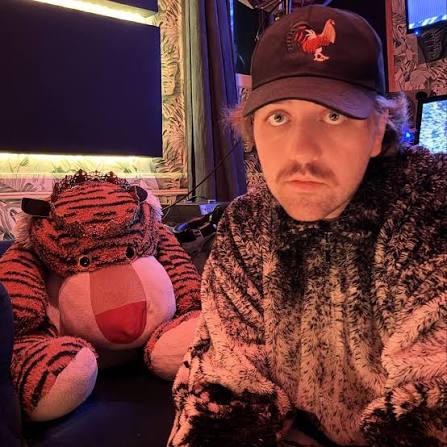
There is a famous cartoon tiger that this album shares the name of, however HOBBES here refers to Thomas Hobbes, a prominent 17th-century English philosopher whose totalitarian theories of total obedience towards our governing structures, in my mind, held a striking parallel to the unapologetic corruption from those in power we see today, every day.
Hobbes espouses a “war of all against all” ethos, where humans are nothing without authoritarian rule, and the sixteen tracks in HOBBES follow a narrative that attempts to reconcile with both the systems we live within and how strong community with strong interpersonal connection can be revolutionary in itself. The first track, “LEVIATHAN”, shares the same title as Thomas Hobbes’ most notable work, giving the first hint that we’re not talking about a tiger here.
Initially this second studio album after my first, “Melted Wax”, was going to be named “Skeleton Key”, with the focus being on creating hip-hop tracks in every subgenre, from trap to drill to boom-bap and jazz rap, even a country rap song at one time. The plan was to make something a little less conceptual than what I had previously done, but the more I delved into Hobbes and Leviathan, the more this idea seemed impossible to avoid.
This album feels very storytelling-heavy, but not always in a straightforward way. When you write, are you imagining actual scenes and characters, or do the stories start more from emotions and ideas?
Bit of column A. Bit of column B. It’s much easier for me to write with a topic in mind, whether that be a specific story I want to share in an abstract way, or a general theme for a song that evokes some kind of feeling or idea.
For example, songs like “GRAVEYARD SHIFT”, “VERONICA”, and especially the closing 9-minute track “THAT’S NICE BRO” were important to approach from the lens of an autobiographical narrator, being pretty intense stories from my life, whereas “SO BORING” and “PRIVATE EYE” stem from running with ideas that fit with different genres/vibes I’m working in.
I try to be very intentional with my writing for the most part, both on fun and serious tracks. Some are great at writing to the feel of a beat or freestyling more general thoughts that flow well together. Never been my strongest suit, but one approach isn’t necessarily better than the other. If someone felt something from what you said you’re already halfway there.
There are a lot of collaborators throughout HOBBES. How did you decide who belonged in this world? Were you giving people specific roles to play within certain songs?
With a strong focus on community throughout the album, it became clear early on in the process that this mentality needed to reflect not just in writing, but in the fabric of the music as well. Finding your people and moving past “imaginary best friends” (HOBBES).
With these fifteen features across sixteen tracks, the people on this album are the people in my city. Some of whom are close friends, some previous collaborators, and some I came to know personally while making this album and becoming more active in my local community.
The music scene of Victoria, BC, just outside Vancouver, is diverse, eclectic, and full of undiscovered talent. I was the studio manager for this creative collective in town, Haus of Owl, during the creation of HOBBES, and met many people there who came to be featured on the album.
In terms of specific roles, there were only two rules I had for myself when selecting features: be good and be local. Ultimately everyone brought their own unique sound to each track, and I’m humbled and grateful that so many talented artists wanted to be a part of this project.
Do you see yourself primarily as a rapper, a songwriter, a storyteller, or almost a director using music as the medium?
At the risk of sounding pretentious, I’ve always first seen myself as a director. It’d be REALLY pretentious to say I’m NOT a rapper, I am, but to me anyone who has a hand in their own music in rap can also be all these other things too.
Rap hosts one of the richest tapestries to tell stories, not just because it’s often the most verbose, but also because there isn’t another genre where wordplay, rhythm, and poetic license can be used so liberally to such an effective degree.
The genres you can bend/fuse/mold together when making a beat is unmatched when you’re in the director’s chair. It’s why I produce/mix/master almost everything I write on. How the song feels, sounds, and moves people are more important to me than a good line or two.
When someone finishes all 1 hour and 2 minutes of HOBBES, what do you want them to feel like they just experienced? A rap album, a collection of stories, a movie in audio form, or something else entirely?
Over an hour of music from an unknown artist is a big ask. Anyone who listens to all of HOBBES, front to back, first of all has my sincere gratitude.
It is an album meant to be played in full as an intense, tumultuous passage through the first time in one’s life where they find true connection and purpose. The first time they stop thinking of themselves.
During the creation of HOBBES I was surrounded by support in my peripheral vision, but couldn’t see the forest through the trees. I felt alone. I felt invisible. I always felt that in a sense. Having so many features on the album, and telling deeply personal stories all throughout, was kind of a way to prove to myself that none of that was true.
That’s why the phrase “what do you think” appears all throughout these tracks - it’s vying for validation that can only come from within. Call me excessive, but finishing this album was literally life or death at the time. That in a vacuum doesn’t earn your support or respect as a listener; it shouldn’t.
With that though, HOBBES becomes a meta-commentary of the stories, social critiques, and verses that a man who was willing to die for his craft felt needed to be shared. The very best work I could possibly put out, surrounded by talented artists that made it all possible.
I’ll never make another HOBBES. I’m in a better place now than I was then. But I’m proud of these songs, from the fun to the serious to the abstract, and I hope that some of the experience making the music translates when listening to the music.
Final Thoughts
What makes HOBBES interesting is that Cole Jackson never really treats rap as something with strict boundaries. One song can function like a personal diary entry, another can feel like a character study, and another can exist mainly because a certain sound or concept was interesting enough to chase. That freedom makes the project unpredictable, but the philosophy and community behind it give everything a center. Even when Cole jumps between different genres and approaches, it still feels like everything belongs to the same larger idea.
More than anything, HOBBES feels like a snapshot of a very specific point in Cole’s life. It captures isolation, ambition, frustration, friendship, local community, and the need to create something meaningful out of all of it. Cole says he will never make another HOBBES, and that might be exactly why the album works. It sounds like something that could only come from the person he was during the period when he made it, surrounded by people who helped turn that experience into something much bigger than a solo rap album.